Tour Types · Wildlife

Endemic,
and ethically seen

The world's smallest primate, the world's largest fish, an eagle found nowhere else on earth, and giraffes on a Philippine island. Wildlife here is extraordinary, and how you see it matters.

SpeciesEndemic & migratory
EthicsNo-touch rules
TimingDawn by design
GuidesSanctuary-trained

Seen properly,
or not at all

The Philippines is one of the world's megadiverse countries, with endemism rates that embarrass much larger nations, and its wildlife encounters are the country's most fragile tourism product. Done right, they fund sanctuaries and change travellers. Done wrong, they are the reason ethical travellers hesitate to book.

The rules we build by: the Tarsier Sanctuary at Corella in the calm of early morning, no touching, no flash, a briefing that makes children into rangers. Whale sharks at Oslob at the first boats, the no-touch and no-sunscreen rules followed exactly, and the honest note that Oslob is a regulated feeding interaction, with seasonal no-feeding alternatives for travellers who want them. The Philippine eagle through the conservation programme in Bukidnon, not a roadside cage.

The reward for doing it properly is the encounter itself: fireflies on the Iwahig River with the engine cut, a giraffe's head over the boat rail at Calauit, a tarsier's eye filling the frame at sixty millimetres. Wildlife, seen properly, is the Philippine journey people talk about for years.
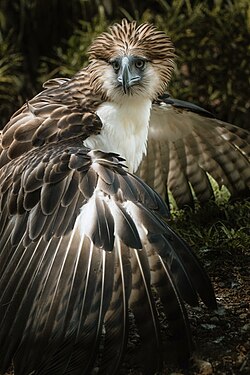
The Philippine eagle, endemic to Mindanao, Philippines, wildlife tours
The Philippine eagle
Kitanglad range, Bukidnon
Found nowhere else on earth

Where the species are

Encounters, by traveller

🐋
The Big-Species Seekers

Whale sharks, dugong seagrass in Coron's season, and the eagle programme: the encounters people cross oceans for, done at the ethical standard.

🦜
The Birders

The Philippines is a birding hotspot with hundreds of endemics: Kitanglad's eagle, the Bohol hornbill, and migratory guests on the mangrove flats.

🧒
Families with Junior Rangers

Sanctuary briefings that turn children into rangers, and the first tarsier that becomes a lifelong conservation story.

🌊
The Marine Watchers

Turtles on the Balicasag drop-off, reef sharks in season, and the pelagics of the deep channels, seen from the surface or beside.

What to know
before you go

The Ethics Line

No touching, no flash, no baiting beyond regulated programmes, and every sanctuary fee shown in the itinerary. Where an encounter is contested, like Oslob, we say so in the document.

Timing

Wildlife runs on dawn and dusk. Tarsiers and whale sharks at first light, fireflies at full dark, eagles on the thermals mid-morning. The days are built around the animals, not the lunch.

Best Season

Whale sharks: November to June in Oslob. Eagles: year-round in Bukidnon, clearest in the dry months. Fireflies: best on dark-moon nights, which shapes the dates.

Permits & Sanctuaries

Sanctuary fees, community consent and protected-area permits are arranged in advance and itemized. Some sites cap visitors daily; we hold the slots.

How Long

Wildlife days live inside wider journeys: Oslob on the Cebu south loop, tarsiers and Loboc on a Bohol base, the eagle programme within a Bukidnon highland stay.

A Word on Patience

Wild animals keep their own schedule. The guides manage expectations honestly: some days the eagle appears, some days the jungle stays closed. Both are part of it.

One day, not one week?

The whale sharks,
as a private day

A private van from Cebu, the earliest slot on the water, and the rest of the day kept your own. No coach crowds, no fixed clock.

See the private day tour

Meet them properly.

We build wildlife days at the ethical standard, timed to the animals, funded by the fees that keep the sanctuaries running, and honest about every contested encounter.

Start Planning Sinulog and Whale Sharks