Northern Palawan · Calamian Islands
Where sunken warships sleep beneath crystal lakes, and limestone islands rise from seas so clear you can see your own shadow forty feet below.
The Island
El Nido dazzles. Coron haunts. Where El Nido is about crystalline lagoons and cliffs, Coron carries an older, stranger beauty — one shaped by geological violence, indigenous Tagbanua stewardship, and the weight of World War II history lying silent on the seafloor.
Coron Island itself is not a place tourists simply visit. It is the ancestral domain of the Tagbanua people, protected as a Natural Biotic Area and on the UNESCO World Heritage Tentative List. Visitors may access its sacred lakes and select lagoons only with permission — which is as it should be. That guardianship is precisely what has kept Kayangan Lake so intact, its walls so undisturbed, its colour so impossible.
Beyond the island, Busuanga forms the beating heart of the municipality. Here, you find the airport, the town, and the launchpad for a week of private island hopping, wreck diving, and the kind of slow mornings that exist only when you are truly far from the world.
Signature Experiences
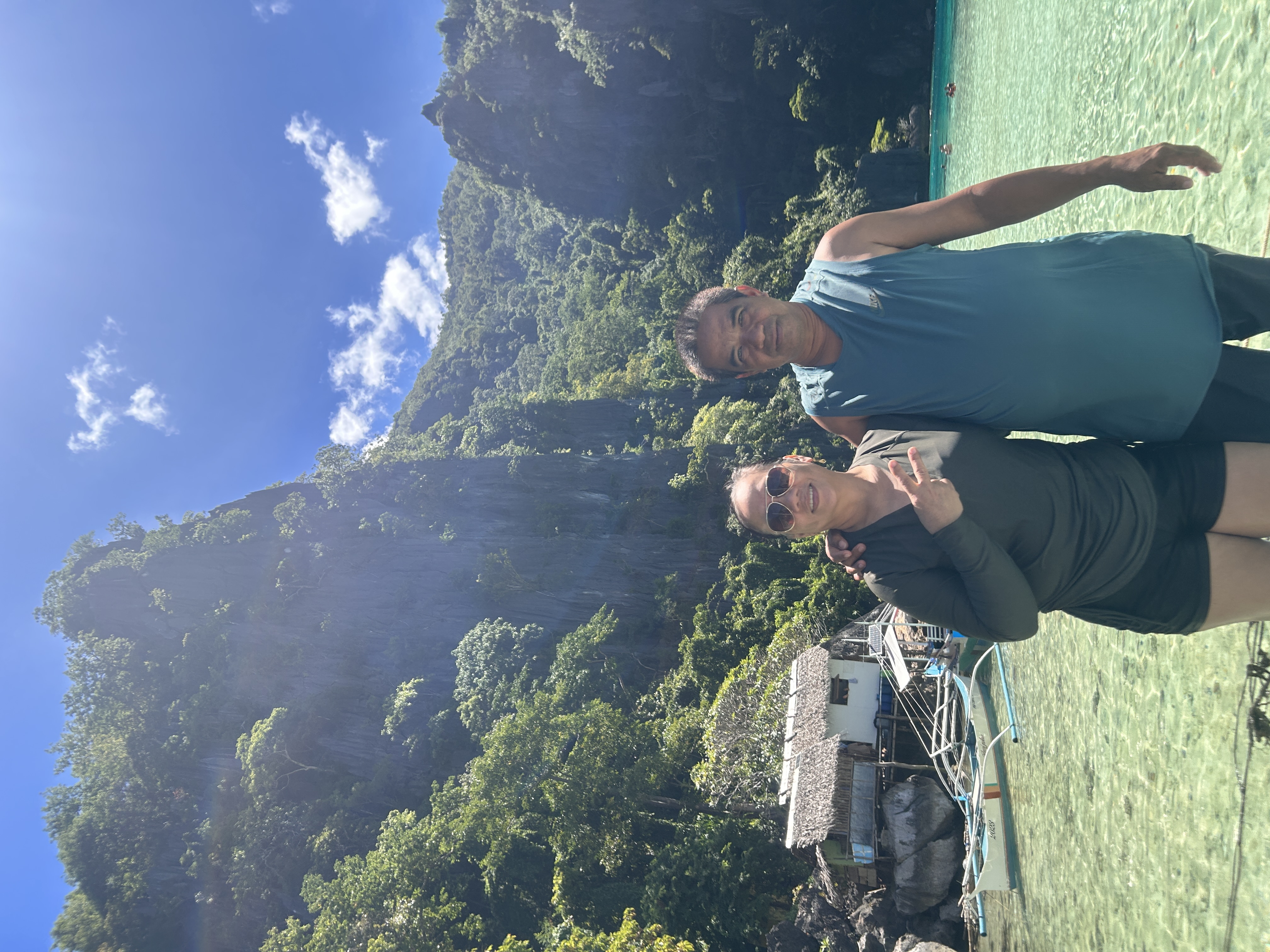
Often called the cleanest lake in Asia, Kayangan is a freshwater lake enclosed within Coron Island's limestone ramparts. The viewpoint above frames a panorama that photographs cannot capture honestly. The water shifts from aquamarine to deep jade depending on cloud and angle.
Two separate bodies of water connected by a submerged cave passage you swim through at low tide. The inner lagoon is warmer — a thermocline effect — and surrounded so completely by cliff that the sky feels like a skylight. You will want to float here for a very long time.
In September 1944, a fleet of Japanese ships was sunk in Coron Bay by American aircraft. Today, at least 12 wrecks are diveable, each one a coral garden. The Okikawa Maru, the Kogyo Maru, the Skeleton Wreck for snorkellers — history and marine life inseparable now.
Named for its resident barracuda and known for a dramatic thermocline at 14 metres — the water temperature shifts abruptly from warm surface to cold depths, creating an eerie, disorienting sensation. The underwater limestone pinnacles are extraordinary.
The farthest island from Coron town and, by that distance, the most pristine. Powder-white sand, warm turquoise water, and almost no one. One of those beaches that makes other beaches feel crowded by comparison. Best reached on a private boat so you can arrive early and linger late.
A genuine oddity and genuine delight: African wildlife — giraffes, zebras, Watusi cattle — on a Philippine island, introduced in the 1970s alongside endemic Calamian deer and bearcat. A two-hour boat ride from Coron town, best as a half-day adventure.
Seven hundred and twenty-three steps. At the top, the word CORON spells itself across the hillside in giant white letters, and beyond it, the town, the bay, and the improbable geography of hundreds of small islands dissolving into haze. Climb at dusk.
Seven small islets standing watch over some of the healthiest coral in the Calamian Islands. Abundant reef fish, living coral formations, and often sea turtles passing through. The name translates to Seven Sins — a satisfying place to feel entirely virtuous.
With a private bangka and a hand-picked guide, Coron becomes a different place entirely. Arrive at Kayangan before the tour boats. Stay on Malcapuya until sunset. Have your captain cook lunch on a deserted beach. This is the version of Coron that stays with you.
For Every Traveller
Among the world's top 10 wreck dive destinations. Advanced certification opens up the deepest Japanese warships; beginner-accessible wrecks exist too. French Kiss Dive Center and others run excellent guided trips.
Private boat, customisable itinerary, coral gardens, white sand, sea turtles, and a seafood lunch cooked on a beach. Coron's islands reward slow travel and early departures.
The Battle of Coron Bay left 12 wrecks on the seafloor — now transformed into coral ecosystems. Above water, Culion Island holds the story of the world's largest leper colony, now a museum of remarkable dignity.
Dugongs (sea cows) inhabit the seagrass beds near Busuanga. Calauit Safari offers the surreal sight of giraffes against a Philippine jungle. Freshwater lakes within ancient limestone cliffs complete the picture.
Private bangka for two, a deserted beach, snorkelling at dawn, and a sunset from the top of Tapyas. Coron is quieter and less developed than El Nido — that quietness is its gift to intimacy.
The Skeleton Wreck is shallow enough for confident snorkellers of any age. Calauit Safari delights children. Pass Island has a basketball court for rainy afternoons. The pace is gentle and unhurried.
Planning Notes
Getting There
Direct flights from Manila to Busuanga Airport (USU) take approximately 55 minutes. Philippine Airlines, Cebu Pacific, and Skyjet serve the route. From the airport, Coron town is a 30–45 minute drive. Island resorts arrange their own boat transfers.
Best Season
November through May is dry season — calm seas, clear visibility, consistent sunshine. December to March is peak. June to October brings the southwest monsoon; some operators pause, though the islands wear a dramatic, untouched quality in rain.
Cultural Notes
Coron Island is the ancestral domain of the Tagbanua people. Environmental fees apply to all sacred lake and lagoon visits. Respect is not optional — it is the price of access to places this pure. Your guides will lead the way.
How Long
Four nights is the minimum to feel unhurried. Six to seven allows a full island-hopping programme, a day trip to Calauit Safari, and an afternoon simply doing nothing on a perfect beach. We recommend seven if combining with El Nido via the expedition route.
Getting Around
In town, tricycles cover everything for a few pesos. For islands, a private bangka is the vehicle of choice — arrange through your resort or a reputable operator. The route to El Nido by expedition boat (3–4 days) is one of the finest journeys in the Philippines.
A Word on Crowds
The famous sites do attract visitors — especially Kayangan Lake at midday. The solution is simple: leave early. With a private boat, you arrive at 7am when the cliffs are golden and the lake is entirely yours. We build this into every itinerary.
We build private itineraries around your dates, interests, and pace — from a four-night diving escape to a week-long expedition north to El Nido.
Start Planning Coron vs El Nido