Southern Palawan · San Vicente
Where the reef is still alive, the beach is still yours, and the only thing on the agenda is the tide coming in.
The Village
Port Barton is what Palawan used to be. While El Nido fills with speedboats and Coron draws the dive crowd, this small fishing village on Palawan's western coast has stayed quiet — deliberately, stubbornly, beautifully quiet.
The road in tells you something. It crosses rivers, climbs through jungle, and mixes paved stretches with dirt track in a way that filters out anyone not genuinely committed. A 4x4 is not optional — it is the beginning of the experience.
What you find at the end of that road is one of the last stretches of Philippine coastline that has not been told what it is supposed to become. Coral reefs still climbing cliff-face walls. Sea turtles that surface close enough to watch. A moonrise over calm shallow water that — once you have seen it — you will spend years trying to return to.
A Note From Arkipelago
"The first time I put my face underwater here, I cried.
The reef was alive — cliff-face walls, clownfish, a sea snake drifting past unhurried.
Port Barton is my family's place. It has been for years."
We do not recommend Port Barton to everyone. It is not the destination for guests who need reliable air conditioning, poolside cocktails, or a spa menu. But for the family that wants to snorkel a reef nobody has trampled, for the couple that wants a beach entirely to themselves at moonrise, for anyone who has felt the sadness of watching a place lose itself to tourism — Port Barton is the antidote.
We know this village the way you only know a place after years of returning. We know which stretch of reef has the turtles. We know the waterfall hike and which river crossing to time with the tide. We know the beach around the headland where the pigs wander and no other guests will find you. That knowledge is what we bring to every Port Barton journey we design.
Signature Experiences
The reef systems around Port Barton are among the healthiest remaining in Palawan. Underwater cliff walls drop into deep blue — thick with coral, clownfish darting through anemones, stonefish resting motionless on the bottom, and on a good morning a sea turtle moving slowly through it all as if time does not apply to it. No dive certification needed. The best of it is in the top five metres.
The main beach sits in calm, shallow water — safe for children, magical at a full moon. When the moon rises over the bay and the water goes silver and still, there are few things in the Philippines that equal it. We build Port Barton itineraries around the lunar calendar when we can.
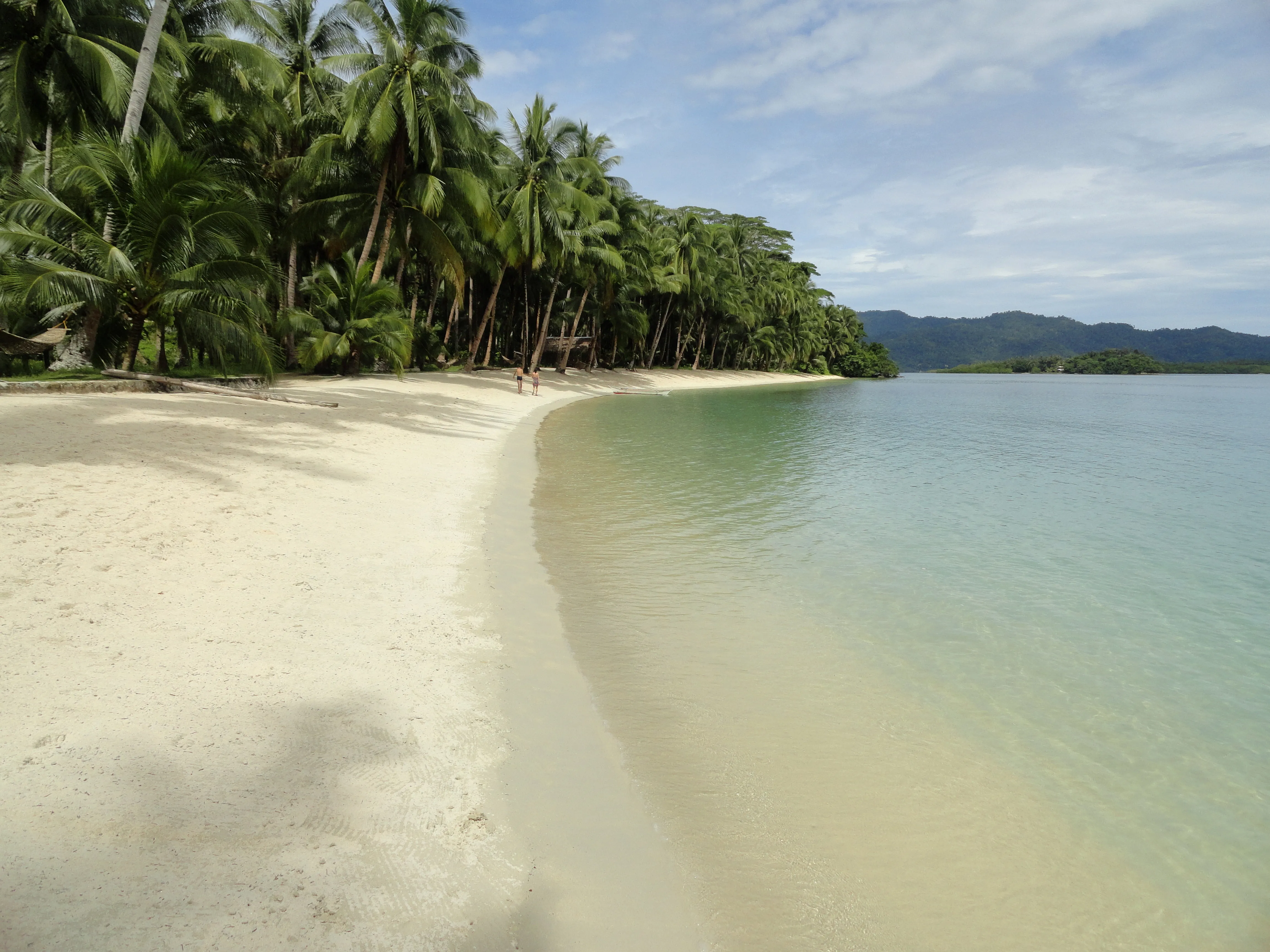
A short kayak paddle from the village brings you to White Beach — a crescent of fine sand with shade trees at the back and a shallow reef at the water's edge. No bangka drops of tour groups. Just you, the reef, and the sound of nothing worth hurrying back from.
Around the rocky headland from the main beach, Coconut Beach is wilder and less visited. Pigs wander the tree line. Coconuts fall without asking permission. The snorkelling on the headland's reef edge is some of the best in the area — and it is almost always empty.
A four-kilometre trail through primary forest leads to one of Palawan's most quietly spectacular waterfalls. The walk itself is the point — cathedral-canopy jungle, birdsong, and the gradual deepening of quiet as you move away from the coast. The pool at the base is cold and clear. We pair this with a morning on the reef so the afternoon feels earned.
Port Barton's bay is ringed by uninhabited islands with white-sand beaches and reef systems that reward patient snorkellers. Sea turtle sightings are common — not guaranteed, but common enough that we build extra time into every island hop. A private bangka means the schedule is yours.
Fourteen kilometres of unbroken white sand — the longest in the Philippines, and still largely empty. Long Beach in nearby San Vicente is a half-day excursion that puts scale into perspective. We include it in itineraries of four nights or more as an afternoon drive and sunset walk.
For Every Traveller
No dive certification needed. The best of Port Barton's reef is in the top five metres — cliff-face coral walls, resident sea turtles, and fish life that has not learned to be afraid of people yet.
Calm, shallow water in the main bay is safe for children of all ages. The pace is gentle. Kayaks, the waterfall hike, reef snorkelling, a moonrise on the beach. Port Barton rewards the family that wants real over polished.
Palawan is a UNESCO Biosphere Reserve and Port Barton sits at the heart of it. Forest trails, sea turtle habitats, undisturbed reef ecosystems, and birdlife that fills every tree line. This is what the Philippines looked like before the resorts arrived.
A moonrise over still water, a reef entirely to yourselves, a beach around a headland where nobody will find you. Port Barton is romantic in the way that matters — the way that actual remoteness creates something you cannot manufacture.
The road in is half the experience. River crossings, jungle track, a village that operates at its own pace. Port Barton rewards travellers who are genuinely interested in the Philippines, not a curated version of it.
An unhurried pace, safe snorkelling, and the kind of restorative quiet that a lifetime of working earns you. We organise comfortable 4x4 transfers so the road is an experience, not an ordeal, and pace the itinerary entirely around your energy.
Planning Notes
Getting There
Fly into San Vicente Airport (SWL) — a 1-hour flight from Manila served by Cebu Pacific and Philippine Airlines. From San Vicente, Port Barton is approximately 45 minutes by road through jungle and river crossings. A 4x4 vehicle is required; we arrange this as part of every itinerary. Treat the drive as the beginning of the experience, not a hurdle to clear.
Best Season
November through May is dry season on Palawan's western coast — calm water, full sun, and reef visibility at its finest. December to March is peak. June to October brings the southwest monsoon; seas can be rough and some island hops are not possible. A quiet Port Barton in the off-season has a particular magic for travellers who do not mind occasional rain.
What to Expect
Port Barton is not a resort village. There is no room service, no swim-up bar, no spa menu. What it has instead is a working beach community that has chosen not to over-develop — and the reef, the quiet, and the light that decision has preserved. Come expecting authenticity, and Port Barton will exceed every expectation.
How Long
Three nights is the minimum to genuinely settle in. Four to five allows the full programme — reef snorkelling, island hopping, the Pamuayan Waterfall hike, a kayak to White Beach, and at least one afternoon of doing absolutely nothing. We recommend combining Port Barton with El Nido or Coron for a complete Palawan journey.
Getting Around
Everything in the village is walkable. For island hopping and reef trips, we arrange private bangka with local operators we have worked with for years. For day trips to Long Beach or San Vicente, a vehicle with driver is organised. Port Barton moves slowly — that is not a limitation, it is the entire point.
The Reef
Port Barton's reef is one of the reasons this village remains on our list. Cliff-face walls covered in hard and soft coral, clownfish, stonefish, sea snakes, and regular sea turtle sightings in the shallower systems. No dive certification needed for the snorkelling — the best of it is in the top five metres, entirely accessible to confident swimmers.
We design private itineraries around the tide, the lunar calendar, and the reef — from a three-night escape to a full Palawan journey combining Port Barton with El Nido or Coron.
Start Planning Explore Coron