Some journeys are built around a beach. This one is built around a date: the third Sunday of January, when Cebu City shuts its main avenue and dances. Anchor on the Sinulog Grand Parade, then spend the rest of three weeks earning it, whale sharks at dawn, a canyon of cliff jumps, fireflies on a black river, and the wind of Boracay to close. Seven bases, three nights each, no backtrack anywhere.
Why a Festival Makes the Best Anchor
The mistake travellers make with the Philippines is treating it as one long beach with transfers in between. The archipelago rewards structure: pick one unmissable, date-bound event, build the whole route backwards from it, and let everything else fall where the geography puts it. The Sinulog Grand Parade, Sunday, January 17 in 2027, is the best anchor in the January calendar. A full day of costumed contingents dancing down Osmena Boulevard, drum crews that you feel in your chest a street away, and a city that has been preparing for a year.
Anchoring on the parade also solves the hardest problem in Philippine planning: Cebu City's hotels sell out months ahead for that weekend. Book backwards from January 17 and the rest of the route assembles itself, south along Cebu's coast, across to Bohol, then the long, slow climb up Palawan, and finally Boracay for wind.
Cebu City → Moalboal → Bohol → Puerto Princesa → Port Barton → El Nido → Boracay → Manila. Seven bases, three nights each, twenty-one nights. Cebu is the start and the end; nothing in between ever returns there, and the only Manila touch is the final exit leg.
Cebu City: Heritage and the Grand Parade
Three nights downtown in the Parian district, on flat walkable streets: Colon Street a couple of minutes away, the Heritage of Cebu Monument around the corner, Magellan's Cross and the Basilica del Santo Niño inside the same walk. A boutique heritage hotel here beats a tower anywhere; the suites carry Cebuano heroes' names and the morning begins with church bells.
The first full day belongs to food, a guided run through the real Cebu: lechon straight from the roaster, puso hanging rice, the street-food stalls residents actually queue at. Then the festival: the dawn fluvial procession on the Saturday, the Grand Parade on the Sunday, watched live from a spot a fifteen-minute walk up the boulevard, where the contingents pause and the dancing is closest.
Moalboal: Whales, Waterfalls and the Canyon
Three hours south by private car on the coastal highway, a drive that happens once and never back. Moalboal exists in this route for one reason: the south coast's big days become short drives instead of six-hour round trips from the city. Base at Panagsama Beach, where the famous sardine run is a five-minute snorkel from the shore, millions of sardines swirling into shapes, turtles over the reef, Pescador Island by boat.
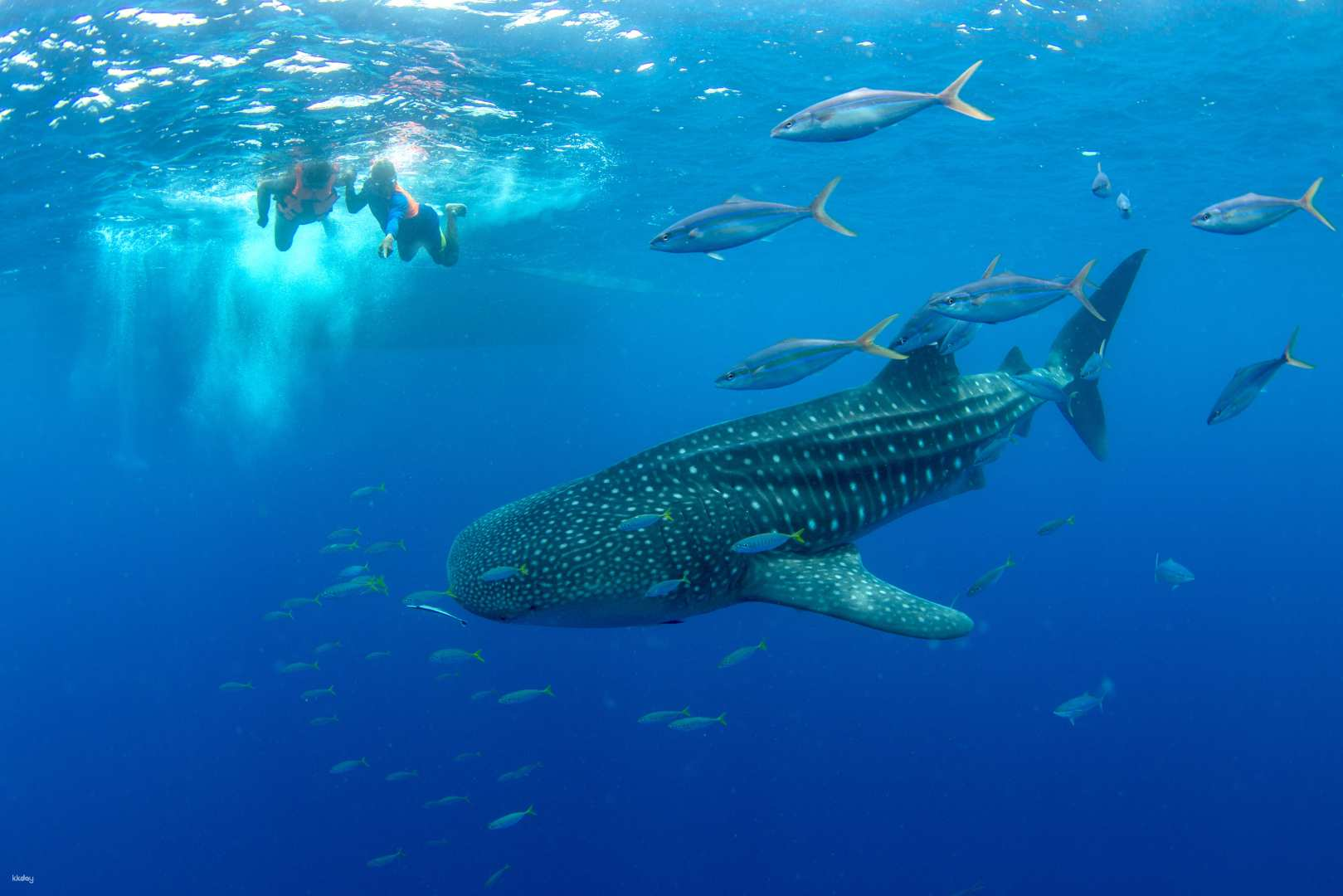
Kawasan Falls canyoneering sits forty minutes inland: seven cliff jumps from three metres up to the thirty-metre headline drop, every jump optional, a canyon zipline in the middle, and the three-tier turquoise pools at the finish. The whale sharks of Oslob are the morning everyone books the trip for, two hours each way, paired with Tumalog Falls twenty minutes beyond: go at first light, follow the no-touch rules exactly, and be back for a late lunch.
Bohol: Tarsiers, Rivers and Reef
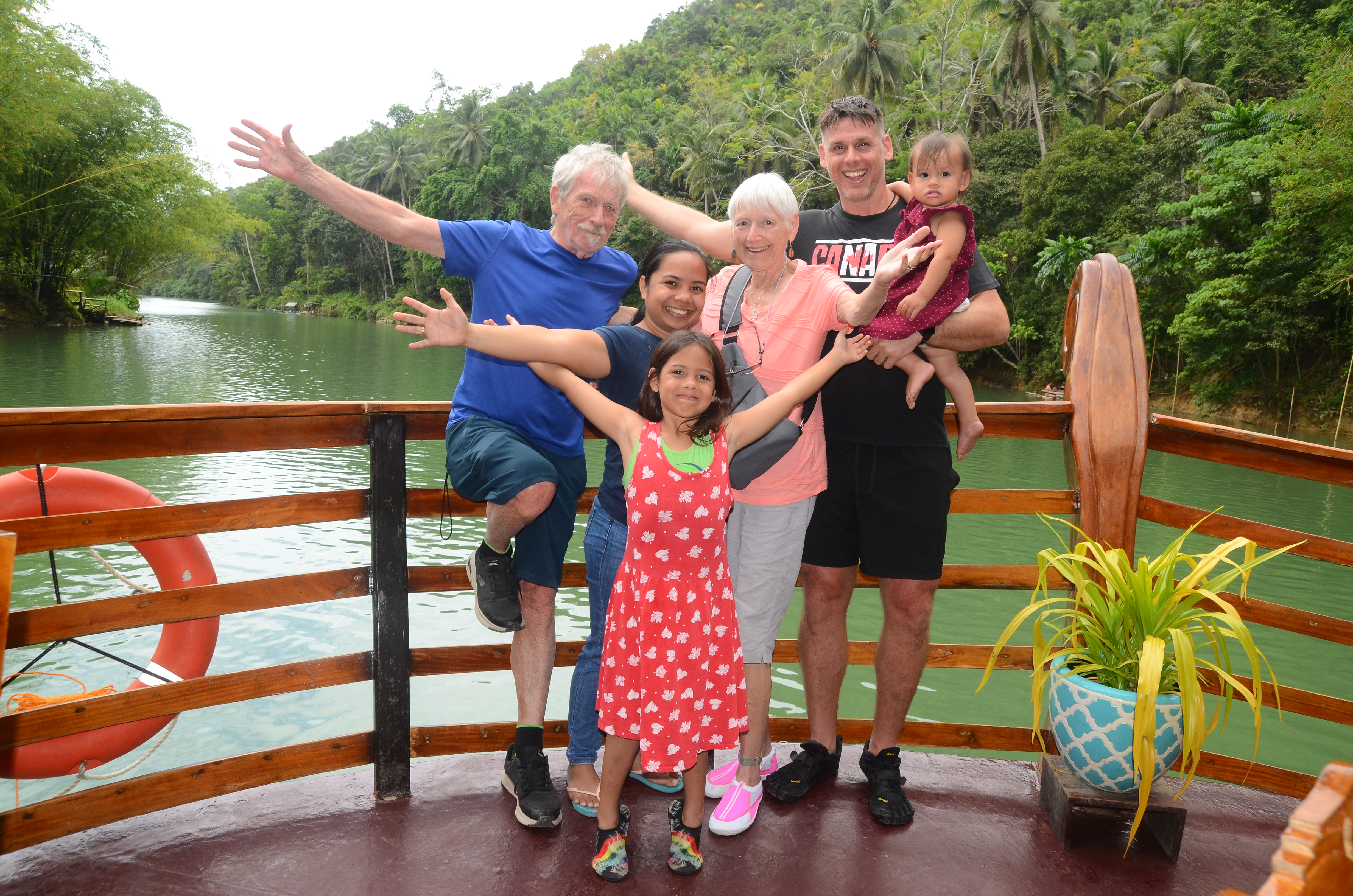
A fast ferry across the strait to Panglao, three nights at a quiet villa property away from the package crowds. The Tarsier Sanctuary at Corella opens best in the early morning when the animals are calm, no touching, no flash, and the guides keep it that way. The Loboc River cruise handles an afternoon, floating lunch, live music, jungle both banks.
Then the water: a private boat out to Balicasag for the coral wall, one of the healthiest reefs in the Visayas dropping past visibility, and turtle encounters on the drop-off itself. Alona Beach does the evenings, and none of it requires a schedule tighter than tide and appetite.
Puerto Princesa: Rivers of Fire and Stone
A direct flight from Bohol-Panglao to Puerto Princesa, daily on two carriers, about eighty-five minutes. The Underground River at Sabang is the UNESCO headliner, one of the New Seven Wonders of Nature, and the daily visitor cap makes the permit a book-ahead item rather than a turn-up hope. A guided paddle into the cave, stalactites overhead, swiftlets and bats in the dark.
The evening that surprises everyone is the Iwahig River firefly cruise: engines cut, paddles only, mangroves outlined in cold light and the Milky Way doing its own show overhead. Puerto Princesa also eats seriously well; the capital's food trip, from bay-walk grills to Tamil-owned bakeries, deserves its own afternoon.
On current schedules there is no direct Bohol-Boracay flight and no direct Boracay-El Nido flight; both are verified. So Palawan runs south to north between them: fly into Puerto Princesa, hop to San Vicente for Port Barton, continue to El Nido, then fly El Nido to Caticlan direct. Every transfer is a confirmed route, and the geography never asks you to backtrack.
Port Barton: the Quiet Side of Palawan
A half-hour hop from Puerto Princesa to San Vicente, then a land transfer into the village, three nights at a small beachfront property on Itaytay Beach. Port Barton is what El Nido was twenty years ago: island-hopping at world-class quality, at a third of the price, with a fraction of the boats.
The island circuit covers Exotic Island, German Island's cream-white sand, Twin Reef's snorkelling, the turtle grass shallows and the Starfish sandbar, and the evenings can run a mangrove cruise up the Inandeng River at dusk, bioluminescent plankton in the bay when the moon cooperates. Three nights here is the trip's exhale.
El Nido: Bacuit Bay, Done Properly
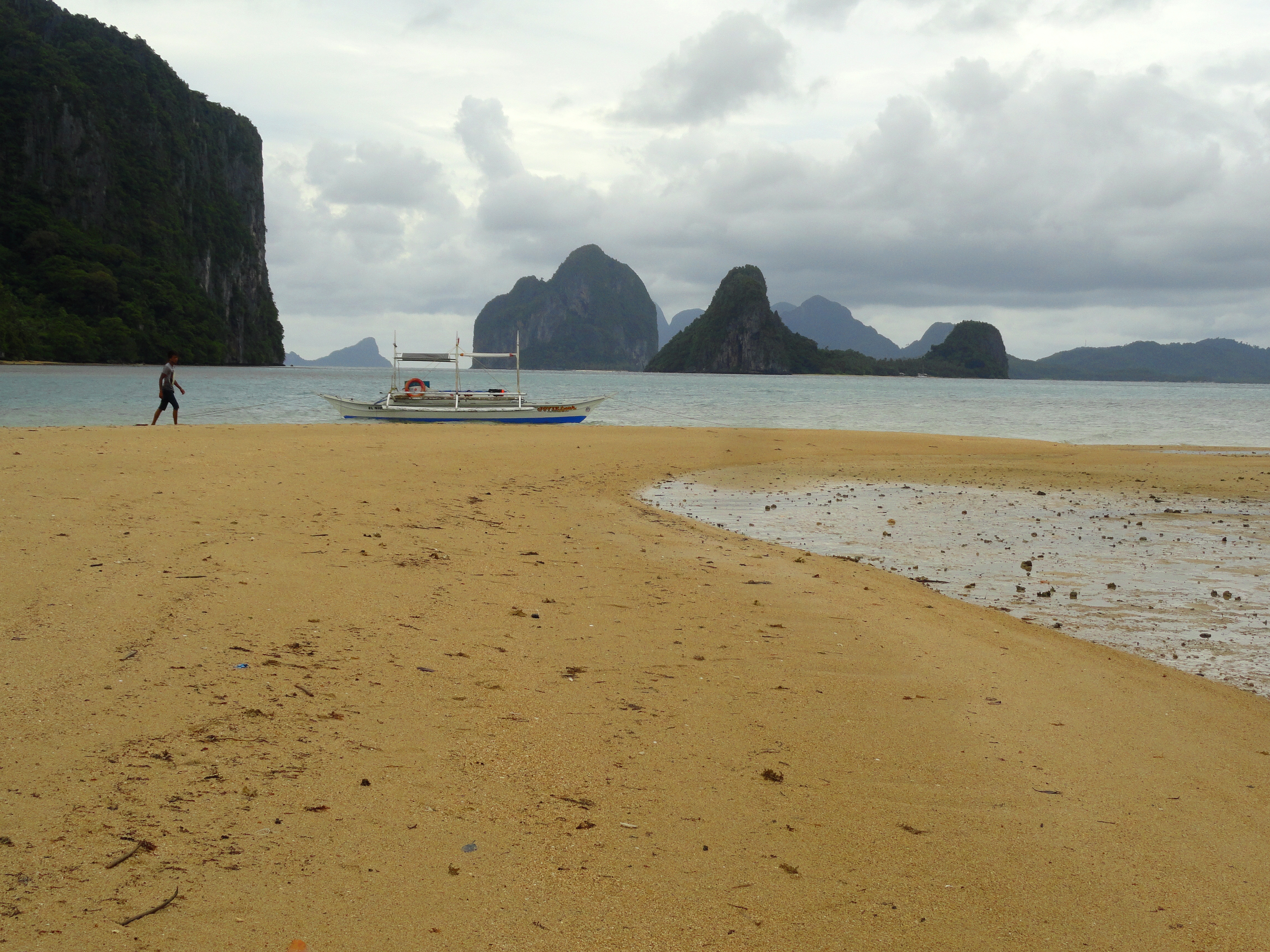
The drive north from San Vicente runs through the fourteen-kilometre Long Beach, one of the longest white-sand stretches on earth, worth a stop precisely because it is on the way. Base at Corong-Corong on the sunset side, three nights, and take the lagoons by private boat: Big Lagoon and Secret Lagoon before the tour fleets arrive, Shimizu Island's reef, lunch grilled on a quiet sandbar.
El Nido rewards the same discipline as everywhere else on this route: go early, go private, and let the evenings be nothing but a beachfront sundowner while the karst silhouettes go black.
Boracay: the Wind and the Nightlife
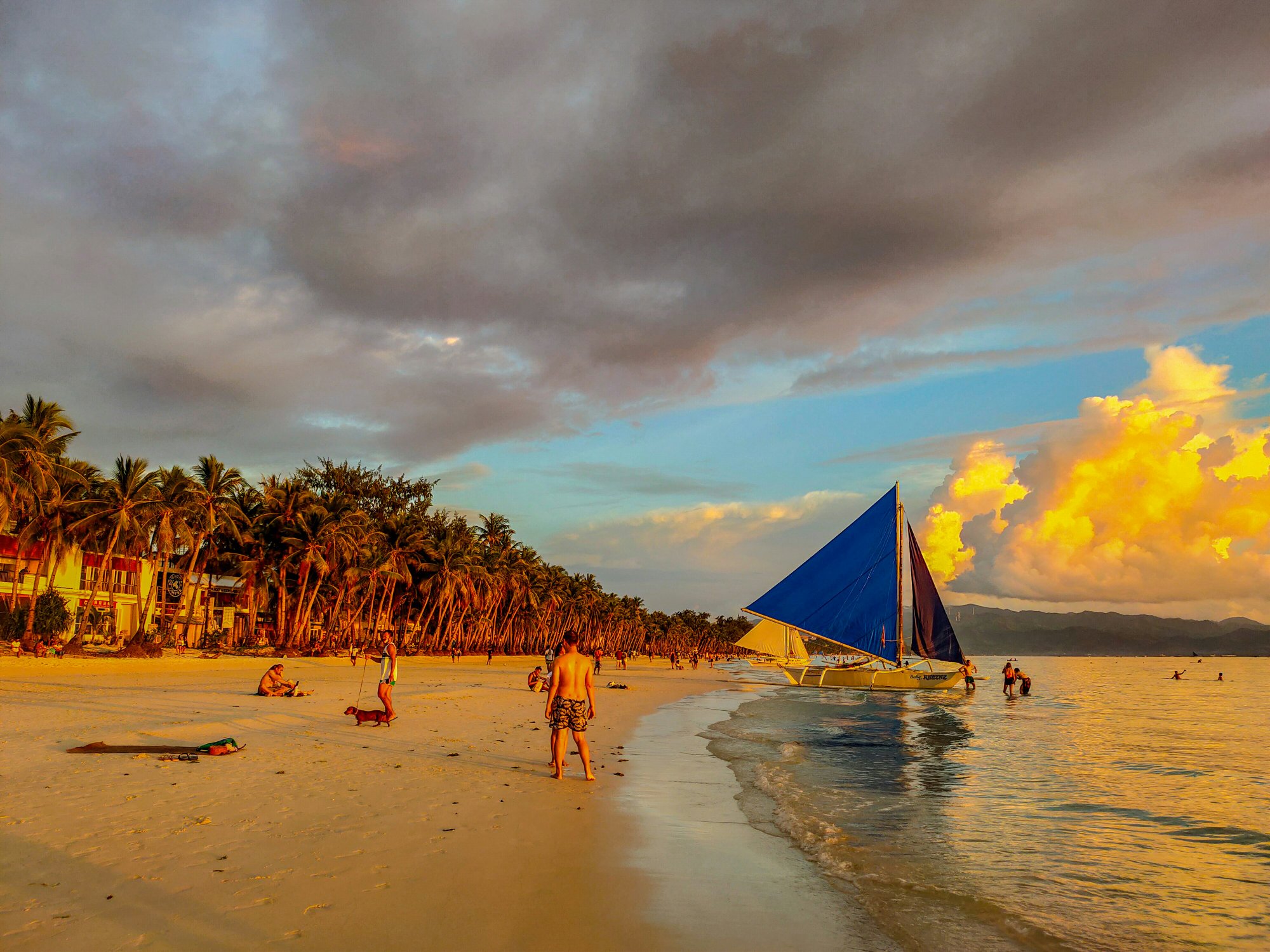
A direct flight from El Nido to Caticlan, roughly an hour, then the boat across. Three nights on Bulabog, the east side that January's amihan wind turns into one of Asia's best kite arenas: steady twenty-knot thermal wind, flat-water lagoon for working on technique, gear rental and guiding for certified riders, and kite schools for anyone finally using the trip to learn.
Nights belong to White Beach, a ten-minute walk through D'Mall: fire dancers, beach bars, and the island's long sunset. It is the right final note, a week of quiet islands ending in motion.
The Exit, and Onward
A direct Caticlan-Manila flight closes the loop, hourly across three carriers, with an evening in Manila before the onward flight, or a same-day connection when the international ticket allows. Twenty-one nights, seven bases, one direction.
Fewer places, taken slowly: three nights at every base, and not one hour spent doubling back.
What This Journey Is Really About
Anyone can list seven islands. The craft is in the discipline: a festival anchor that fixes the calendar, transfer days that carry their own experiences, whale sharks at dawn instead of in a convoy, a canyon on the way rather than an excursion from a distant city. The Philippines rewards travellers who route with intention, and January, with its dry season on both the Visayas and Palawan coasts, is the month that makes a route this ambitious honest.
We design journeys like this one, festival-anchored, one-way, three nights everywhere, for travellers who would rather see fewer places properly. Tell us your January; the parade fills first.
Frequently Asked Questions
Tell us when you'd like to go.
Every Arkipelago journey begins with a conversation. We'll respond within 24 hours.
Begin Your JourneyRelated reading: Private Tours in the Philippines: What They Actually Look Like · Coron vs El Nido: The Honest Answer · A Philippines Honeymoon Over the Holidays