Tour Types · Diving
The Philippines sits at the centre of the world's marine biodiversity, with twelve WWII wrecks in one bay and walls that drop past visibility. The reefs are legendary. The crowds, privately arranged, are optional.
The Standard
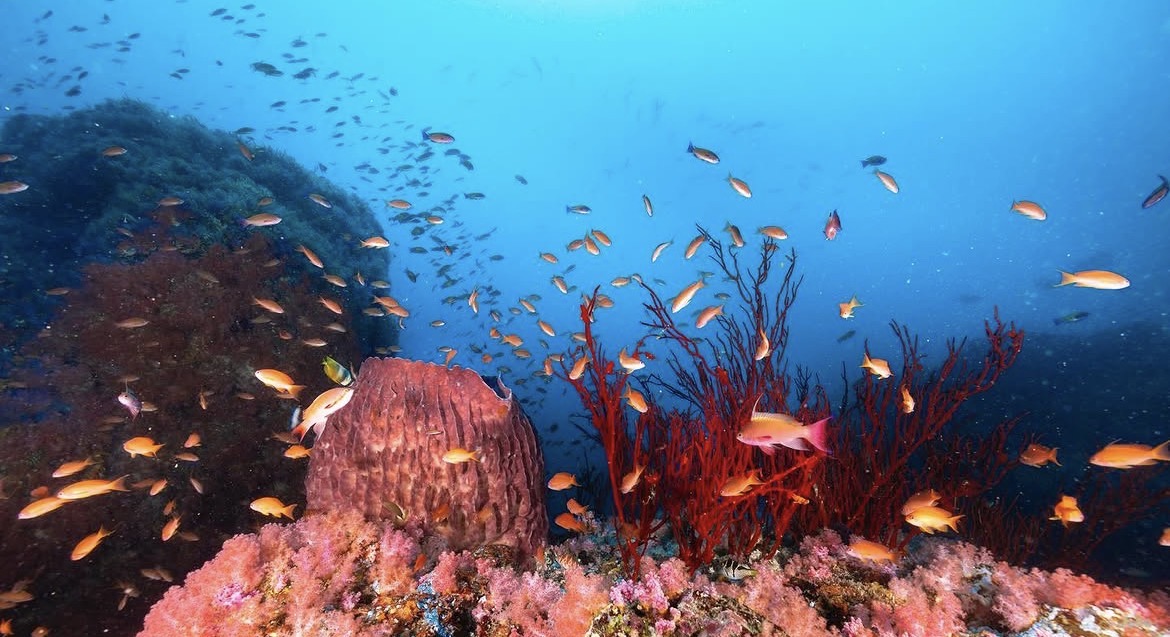
The Coral Triangle holds the highest marine biodiversity on the planet, and the Philippines sits at its heart: more species of coral and reef fish than the Caribbean and the Red Sea combined. What that means in the water is simple: more of everything, closer to the surface, on more sites than a diver could clear in a season.
The icons are real. Coron Bay holds twelve Japanese WWII wrecks, arguably the best wreck diving in Asia, from shallow hulls a snorkeller can see to deep technical penetrations. Verde Island sits at the theoretical centre of global marine biodiversity. Balicasag's wall off Bohol drops past where sunlight meaningfully reaches, turtles riding the blue edge.
The Arkipelago difference is the boat and the briefing. Small dive boats, vetted operators, sites chosen by tide and season, and dive days woven into wider journeys, so a non-diving partner snorkels the same reef, walks the same island, and eats the same lunch. Divers get their bottom time. Nobody gets warehoused on a day boat.
The Dive Map
Twelve Japanese vessels sunk in one 1944 raid, from the shallow Olympia Maru to the deep Irako. Penetration for the trained, majesty for everyone.
The centre of the Coral Triangle by scientific measure. Currents feed a wall of hard coral that drops beyond recreational light.
A swim-through at twelve metres that opens onto schools of snapper and trevally, with The Canyons drift beyond for the advanced.
A marine sanctuary drop-off with turtles in the blue and a fish bowl of jacks. Turtle Point and the black forest in one morning.
A freshwater lake inside a volcano crater, with a thermocline that swings from bath-warm to surprisingly cool in a metre. Like diving on the moon.
Twin Reef and the turtle grass shallows, snorkelled from a private bangka with a fraction of El Nido's boat traffic.
For Every Diver
Shallow wrecks, coral gardens and turtle bays with divemasters who keep the ratio small and the depth honest. Certification courses run at Puerto Galera.
The Canyons' currents, Verde's walls, and deep Coron penetrations with operators who check logs, not just signatures.
The same reefs from the surface: Balicasag's wall is visible from snorkel depth, and Port Barton's shallows are the best snorkelling in Palawan.
Dive days woven into a wider expedition, Coron wrecks on the way to an El Nido crossing, with a liveaboard catamaran as the support boat.
Planning Notes
Certification & Logging
Bring your certification card and logbook; operators verify both. Refresher dives are arranged before advanced sites, and no one is talked into a depth they have not earned.
Best Season
Coron and Palawan: October to May, best visibility March to May. Puerto Galera: November to June. Balicasag: year-round, calmest March to June.
The Boats
Small, vetted dive operators with proper ratios, oxygen aboard, and site briefings that name the current before you roll in. Day boats are private where the site demands it.
How Long
A wreck week in Coron earns five to seven nights. Puerto Galera works as a three-night dive base. Balicasag is a day trip from a Panglao base of three nights.
Non-Divers
Every dive base is chosen so non-divers have a real day: snorkelling the same reef, island walks, spa afternoons. Nobody waits at a hotel for the boat.
A Word on Safety
Dive insurance is required for advanced sites, and we confirm operator safety records the way we confirm hotel rates: directly, in writing.
We build dive journeys around your certification, the season, and the tide tables, with operators we have vetted and surfaces your non-diving travel companions will love.
Start Planning Puerto Galera Diving Tour