Itinerary · Philippines by Sea
A Philippines Catamaran Itinerary: El Nido to Coron, the Slow Way
By Kathy Hingan · November 2, 2026 · 9 min read
There is a version of the Philippines that lives between its airports. Most travellers cross from El Nido to Coron at altitude, and from that height the middle of Palawan is a patchwork of blue. From the deck of a private catamaran, it is the whole point of the journey.
This itinerary is built from a journey we designed this season: five bases, one direction, and a four-day private catamaran crossing at the centre of it. Bohol's reefs and hills, El Nido's lagoons from a private island base, the island corridor most travellers only fly over, and Boracay's wind to close. Private where it counts, five-star with ocean views throughout, every transfer and flight coordinated end to end.
The route is one line and never doubles back: Manila, Bohol, El Nido, the crossing, Coron, Boracay. Each base earns its stop, and the long middle belongs to the boat.
The Route, Base by Base
Bohol, three nights. The reefs first: a private boat out to Balicasag, where the reef falls away into a wall and turtles move through the blue, then the Virgin Island sandbar at low tide with lunch cooked on board. The hills after: an early start beats the coaches to the Chocolate Hills, the viewpoint quiet for the first hour, and a slow lunch cruise on the Loboc River follows, flat water the whole way.
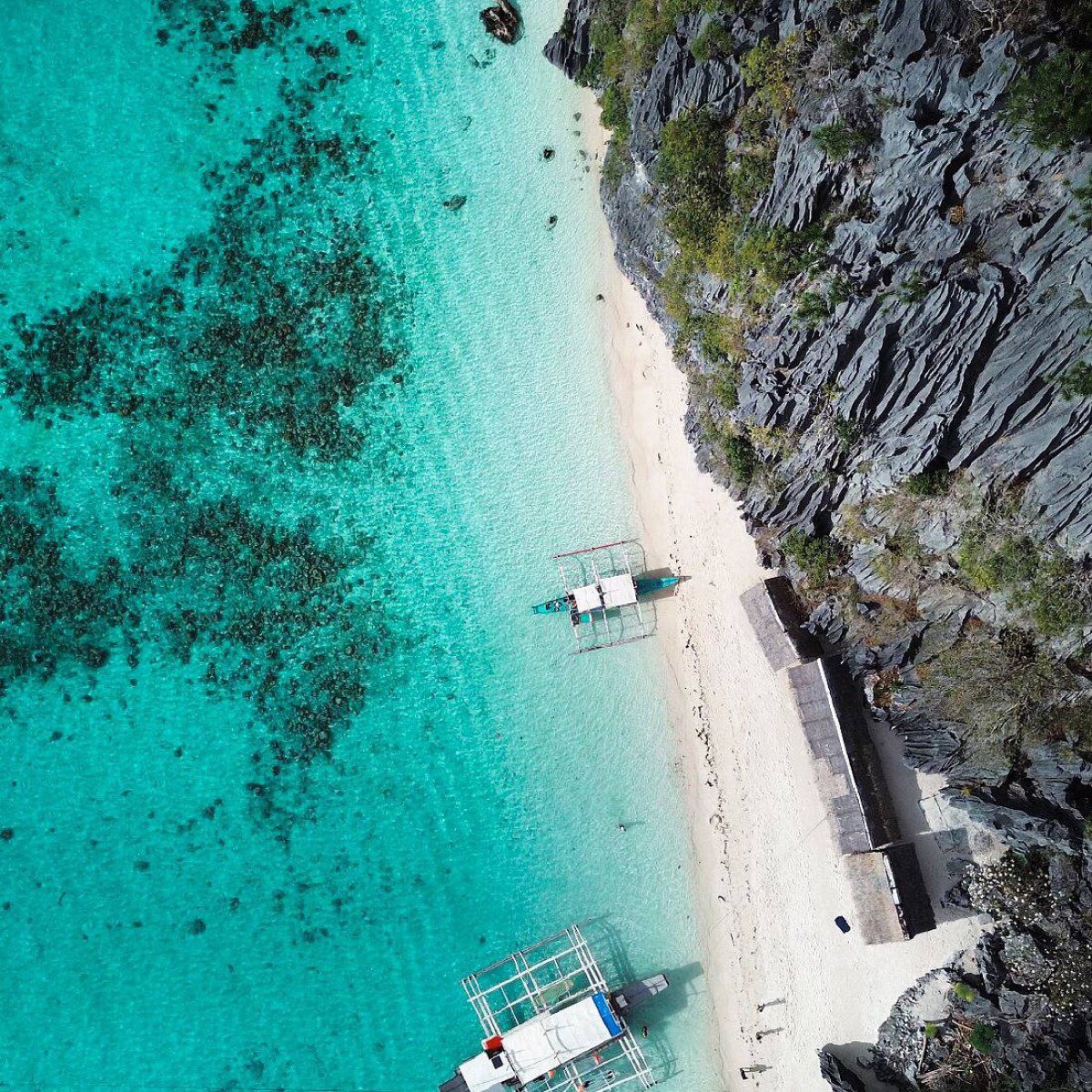
El Nido, three nights. The nonstop hop from Panglao to Lio takes about an hour and forty, landing five minutes from the beach. One private bangka and its crew stay with you for both island mornings: the Big Lagoon and the Secret Lagoon first, glass still, before the day boats leave the pier, then Helicopter Island's limestone spines and a drift over the reef. Lunch is grilled on board at a beach with no other boats on it.
Then the point of it all. A short transfer to the pier on the eighth day, and the flight plan ends there. The catamaran waits at anchor with its captain and crew, and the next four days belong to the corridor: the island chain between El Nido and Coron that package itineraries cross by air and never see from the water.
"The corridor between El Nido and Coron is the part of Palawan most travellers only ever fly over. From the deck, it is the whole point."
The Crossing, Day by Day
Day 1. Out of Bacuit, into the empty middle. The boat clears El Nido's chart by late morning and the islands thin out. The first night's anchorage is in the Linapacan group, a bay most charts barely name: kayaks off the swim platform, a sundowner on deck, dinner cooked aboard by the crew, and the first night's sleep at anchor.
Day 2. The reefs between the islands. The day belongs to the water: snorkelling from the boat's own gear over reefs that see a fraction of Bacuit Bay's traffic, warm water and, in April, visibility that can run past thirty metres. The afternoon crossing to the Culion side ends with the sun dropping from the deck, engine off.
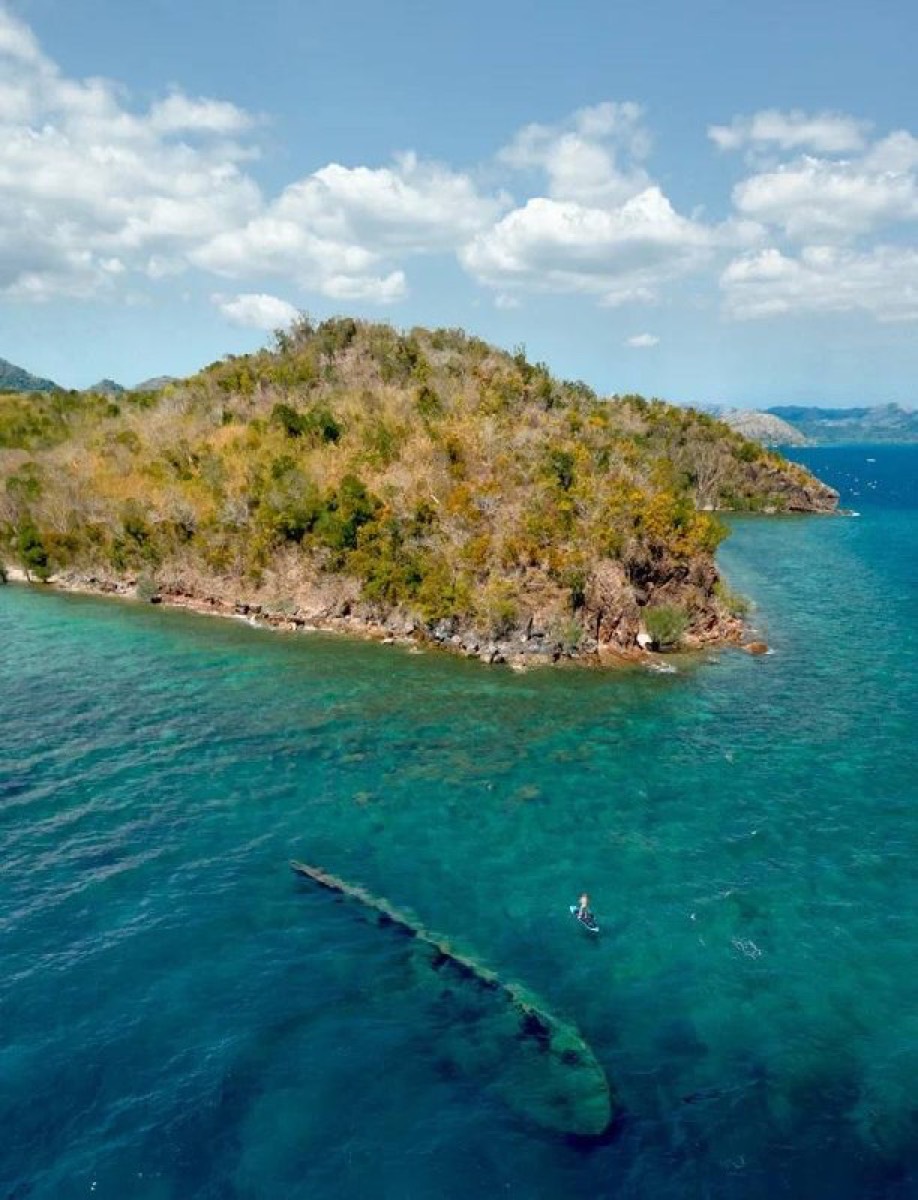
Day 3. The Culion coast. A beach barbecue set up at midday on a coast with no road in, then a slow afternoon of coves and sandbars on the approach to Coron waters. The third night at anchor, close enough to town that the morning run in is short.
Day 4. Coron harbour by midday. A final swim off the platform, then the short crossing in: four days and three nights aboard, exactly as chartered. Landside by midday, and the evening is real beds on Dimakya Island, a long shower that is not on a boat, and the house reef off the beach.
The Route at a Glance
Manila → Bohol → El Nido → four days aboard your own catamaran → Coron → Boracay. Five bases, one direction, no backtracking. The crossing sits in the middle of the journey: four days, three nights, captain and crew included, everything aboard from snorkel gear to Starlink.
The Boats on the Table
For a crossing like this we put two boats in front of you, and the route is identical either way. The first is a 58-foot sailing catamaran, Philippine-based and Philippine-operated, with five guest cabins, all with private en-suite bathrooms, air-conditioning that runs through the night, a flybridge with a second helm, and a professional captain and crew. The second is a 44-foot Lagoon, two queen cabins with en-suite bathrooms, fan-cooled, offered through a third-party listing with the skipper included.
The difference is the usual one: size, age below decks, cooling, and who is accountable when something needs fixing. The local boat mobilizes faster, carries a crew that knows these waters the way a driver knows his own street, and comes with written contract and insurance terms. The listing boat costs less and sleeps fewer. We price both honestly and let you choose; the corridor does not care which hull you take it on.
After the Crossing
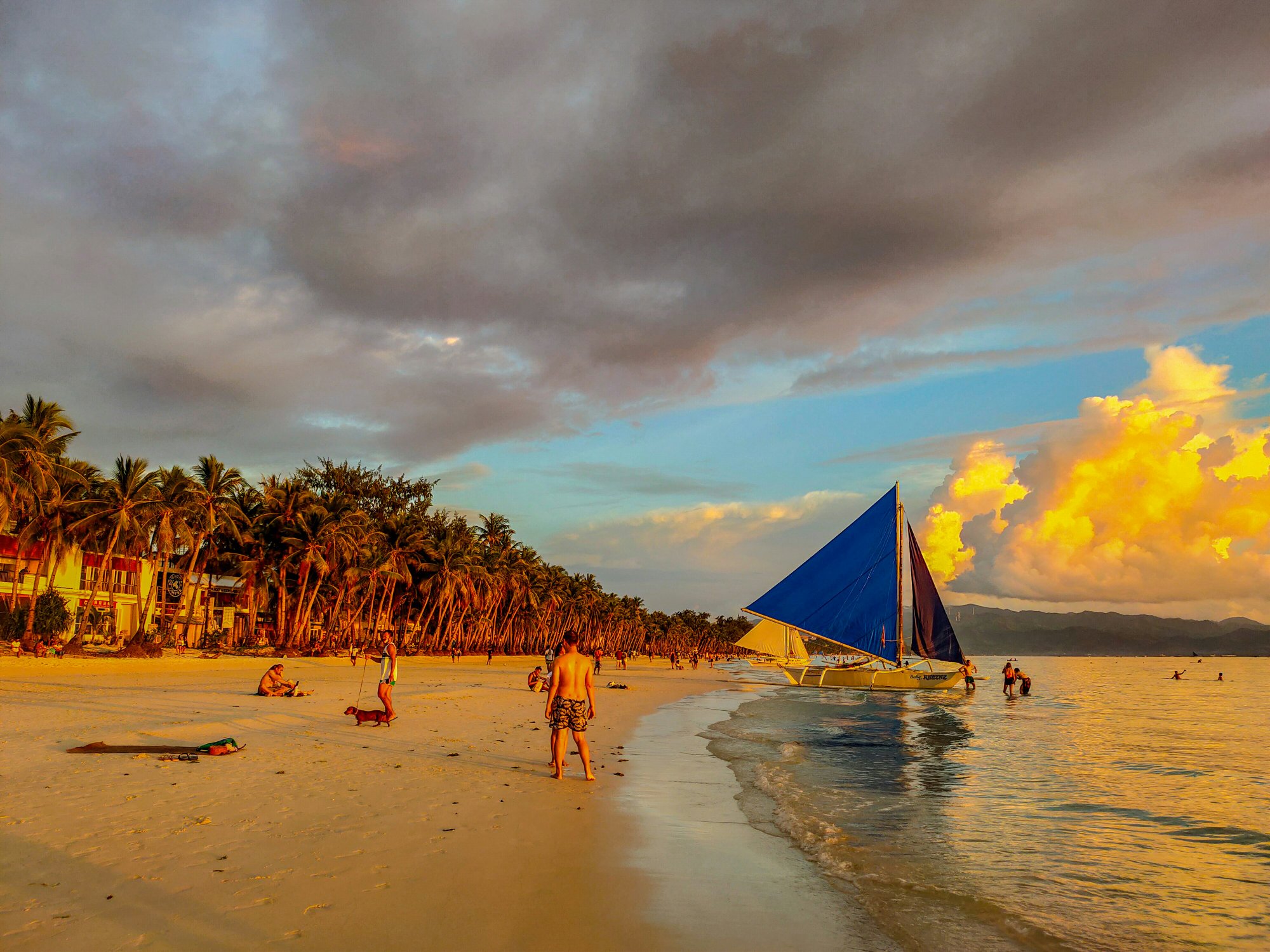
Coron gets one deliberate night: real beds, the house reef off the beach, and the luxury of doing very little while the crossing settles. Then the two-leg day south, Busuanga to Cebu and Cebu to Caticlan, both real nonstop routes with daily service, about four hours airport to airport, because there is no direct flight between Busuanga and Caticlan. The fifteen-minute boat across to Boracay runs right after, and the last base is wind: kitesurfing if the wind calls, a sailing paraw if it does not, one private island-hopping morning around the southern coves, and White Beach evenings with the fire dancers.
When to Go, and How Long
When. The dry season, November to May, is the window for the whole route, and the flattest water sits in March and April. The crossing is always subject to sea state: if the Coast Guard holds the boats, the day moves, and the rest of the journey does not.
How long. About two weeks on the ground covers it without rushing. The crossing needs its four days; the bases around it can flex shorter.
What This Journey Is Really About
Most Philippines itineraries treat the sea as the thing between hotels. This one treats it as a base, four nights of it, with a crew, a route of your own, and anchorages the schedules never touch. We design very few journeys with a boat at their centre. We think that is exactly why they work.
Frequently Asked Questions
Can you sail from El Nido to Coron?
Yes, and it is the best way to see the middle of Palawan. The crossing runs four days and three nights on a private catamaran with captain and crew, anchoring each night: the Linapacan group first, then the Culion coast, then Coron waters. It is the same island corridor the flights skip entirely.
When is the best time for the El Nido to Coron crossing?
The dry season, November to May, with the flattest water in March and April. Crossings are always subject to sea state: if the Coast Guard holds the boats, the day moves, and the rest of the journey does not.
How many days does a Bohol to Boracay journey with the crossing need?
About two weeks on the ground: Bohol for the reefs and the hills, El Nido for the lagoons from a private base, four days and three nights aboard the catamaran, a night in Coron, and Boracay to close. The crossing itself needs its four days; everything around it can flex.
Ready to see the corridor from the deck?
Every Arkipelago journey begins with a conversation. We'll respond within 24 hours.
Begin Your Journey
Related reading: A 14-Day Philippines Itinerary for Two: Boracay, Palawan and Coron · Coron vs El Nido: The Honest Answer · Yacht & Catamaran in the Philippines